With the end of the war in Europe, Jack Boylan was ordered toward the Pacific war. First he went to Marseilles and Aix en Provence (there is a picture of my Uncle standing in uniform at the "round about" in Aix) where he supported the return of US troops coming up through France from Italy. He operated control points for the movement. Then, loaded on a ship in Marseilles, he was headed to the Pacific war through the Suez Canal. This movement was redirected and he returned to the United States by a passage around Cape Good Hope to Norfolk, Virginia.
Christmas 1945, Jack Boylan was on his way overland to Camp Gordon Johnson by train and bus. New Year's Eve 1945/1946 he reached the Presidio at San Francisco. The next assignment was on a "Welcome Boat" that cheered the troops home from the Pacific war.
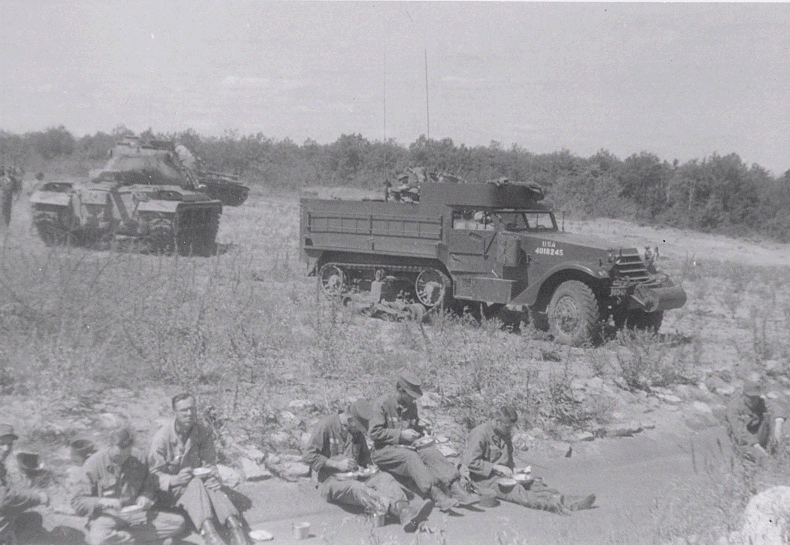
Photo source: Christopher J. Boylan (Jacks son) Jack is eating C-Rations on the road. (2nd from the left) during a New Jersey National Guard field excercise about 1954, Camp Drum
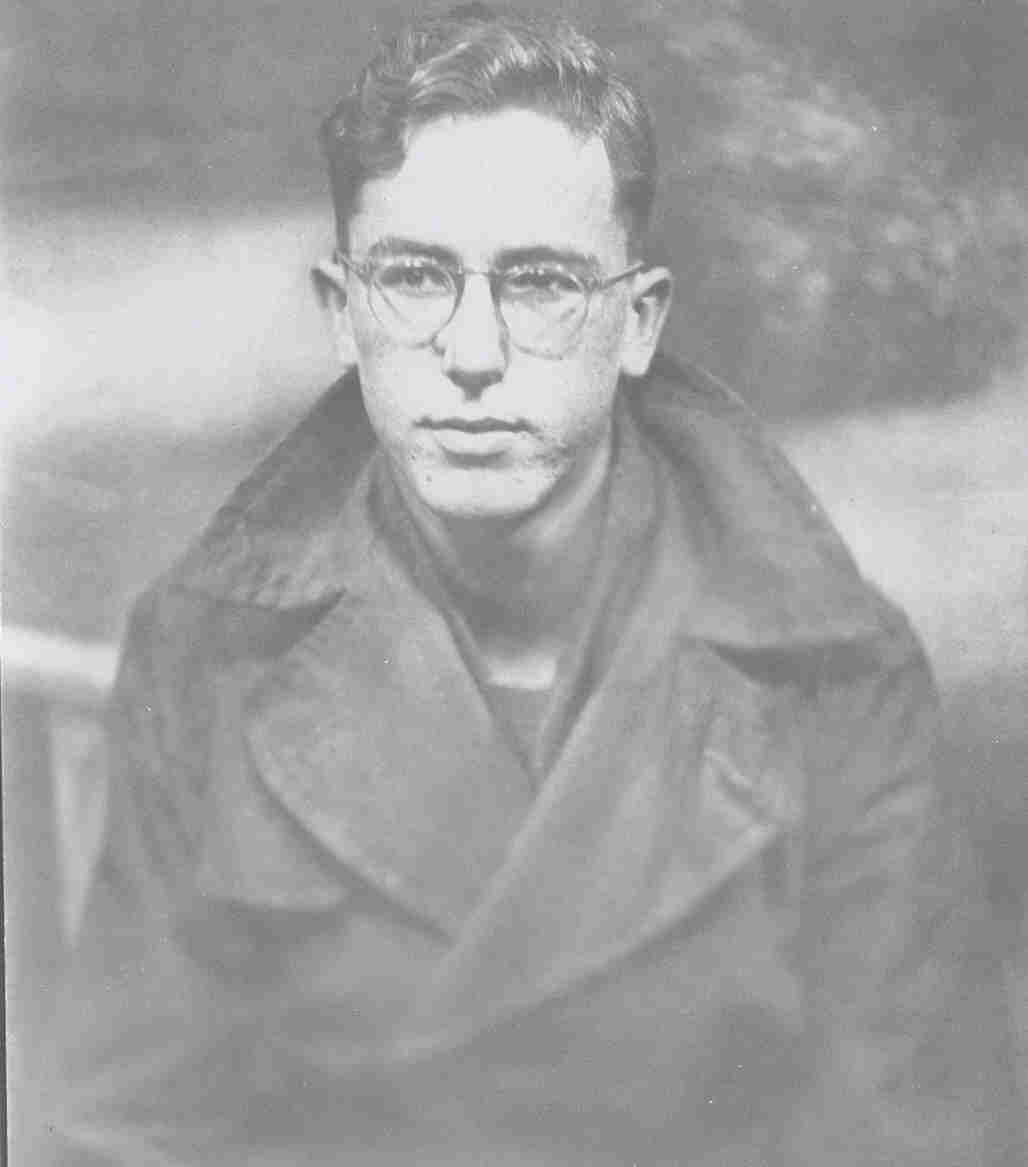
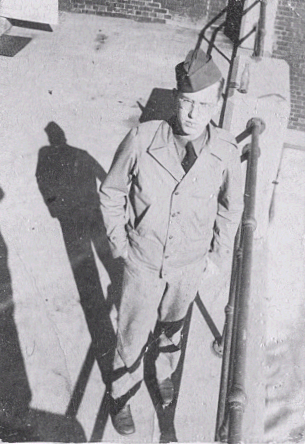
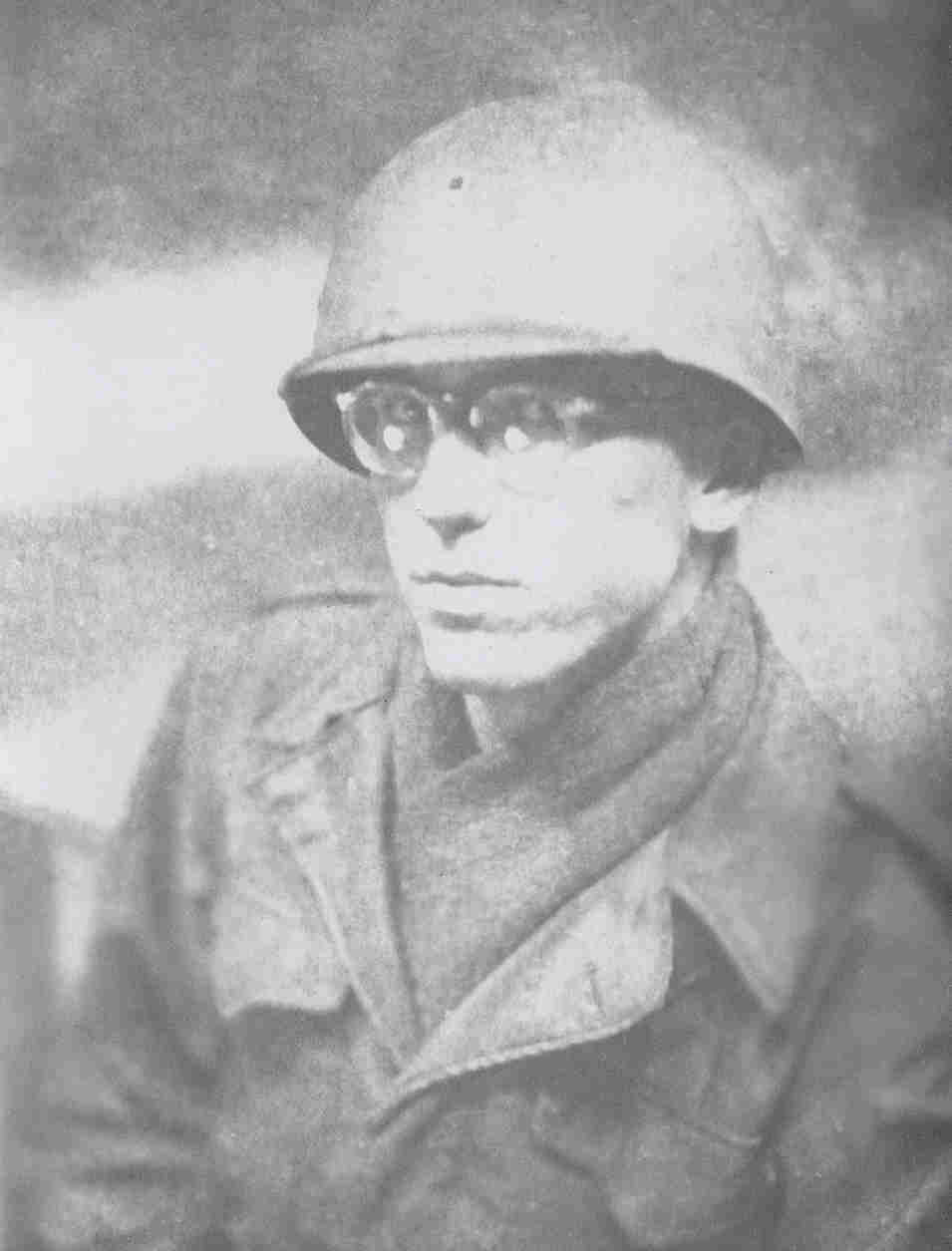
WO Jack Boylan, still looking young in December first 1954
Photos courtesy of: Christopher J. Boylan (Jacks son)
WO John V. Boylan WWII Experiences
WO (ret) Jack Boylan, recounted these experiences in the US Army during WWII to his nephew, Col. S.V.Boylan in September 2001 in Jacks home in Breton Woods, NJ.
The first war year for America, 1942. Jack was in his last half year at Barringer HS in Newark, NJ. January 1943 was to be his normal graduation. He volunteered for the Army in October 1942. After receiving a wartime high school Diploma, he was sent to Ft Dix, NJ for basic training. The Army rated him a non-combatant due to his eyesight and he was sent to Camp Shanks in Orangeburg, NY where he supported the loading of troops on the two great liners, Queen Mary and Queen Elizabeth o bring them into the war zone.
One day, Uncle Jack saw an announcement on the bulletin board informing about a Warrant Officer exam for small boat pilots. As Jack grew up with boats on the Jersey coast, this seemed to be a logical thing to pursue. He took and passed the written exam at Camp Shanks. The practical exam followed on the Hudson River. He was asked to "take the wheel", did so and was seen by the Army to be at home with a vessel. Two months later, 10 March 1944, he was promoted to Warrant Officer, at that time the youngest WO in the US Army.
After some time at Camp Gordon Johnson, Florida near Tallahassee, Jack shipped out on the SS Manhattan from Boston to Liverpool. After a short stay in England, he began his career in the war zone. First, a train trip down to Southampton, and then by ship to Omaha Beach in Normandy. This was about the middle of September 1944. After some time in bivouac, he was assigned to a tug boat of the 357th Harbor Craft Company in nearby Cherbourg, duty - towing cargoes from deep water into Cherbourg's inner harbor at high tide. The Germans had destroyed the locks at Cherbourg and this was the only way to get the needed tonnage on shore to support the rapidly advancing American Army in France.
WO Jack Boylan's next assignment was to go with half his company to Granville to offload coal from Wales using wooden tugboats. It was here that he received an assignment to head off German E-boats with a 50 cal MG mounted on a wooden tugboat. This would not have been a fair match if he had run into an E-boat at night.
2. While on the Seine, near Rouen with the 372d Harbor Craft Company pulling barges, Jack was called out to search for the single engine Noorduyn 'Norseman' C-64 aircraft that went down with Glenn Miller aboard in the Channel. Nothing was ever found of the Army Air Corps Major, the most famous popular musician of the WWII era.
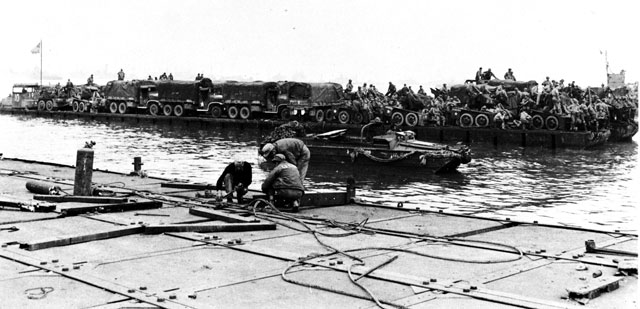
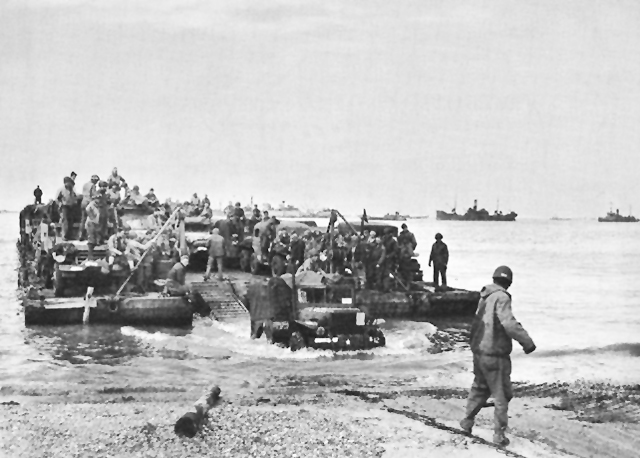
Perhaps the most important contribution of WO Jack Boylan was bridging the Rhine river. For a short time in March 1945, Jack Boylan was moved up to the Rhine near Remagen in Germany to assist with the all-important float bridging over the river. Here his ability as a skipper was applied to the "Rhinos", motorized pontoons that had to stay at speed to keep a float bridge straight against the river current. They were powered by two large outboard Chrysler marine motors with 143 hp each. The following pictures show powered Rhino barges of the type that Jack used to bridge the Rhine.
Source Public Domain Rhino barges being used as barges/landing craft at Omaha Beach http://ftp.ibiblio.org/hyperwar/USN/Building_Bases/bases-21.html
Two events of world interest made a mark in Jack Boylan's life, the sinking of the troop ship Leopoldville on Christmas Eve 1944 and the disappearance of Glen Miller, the famous bandleader of the Army Air Forces Band.
1. Jack was on a tug that went to the rescue of the Leopoldville, torpedoed 10 km off Cherbourg on Christmas Eve 1944 by the German U-Boat U-486. The Belgian passenger ship with British crew was carrying 2.235 men of the 262nd and 264th Regiments of the 66th US Infantry Division from Southhampton to Cherbourg to help blunt the German attack in the Battle of the Bulge. Jack's tug made three passes to bring off survivors and the dead from the sinking vessel. 763 troops died in the icy waters when the troop ship sank. Pictures of the Leopold and the wreck are here LTC Arthur Hummel, a fellow officer of the 357th submitted a detailed report of the action reprinted in the book: Voices of my comrades by Carol Adele Kelly, page 363: You can read Hummels report about the weather conditions on that day (20 foot sea) and an eyewitness account of how the Leopold when down, if you copy and paste the following (LONG) link to your browser:
http://books.google.de/books?id=gDCjz6yfV2gC&pg=PA363&lpg=PA363&dq=357th+Harbor+Craft+Company&source=bl&ots=mzQZZSnlz3&sig=jtfCe0tJtS7XgjPS9YK2eI9ZaEM&hl=de&ei=jJ5LS_eYCoHJ_ga UztiZAg&sa=X&oi=book_result&ct=result&resnum=4&ved=0CBQQ6AEwAw#v=onepage&q=357th%20Harbor%20Craft%20Company&f=false
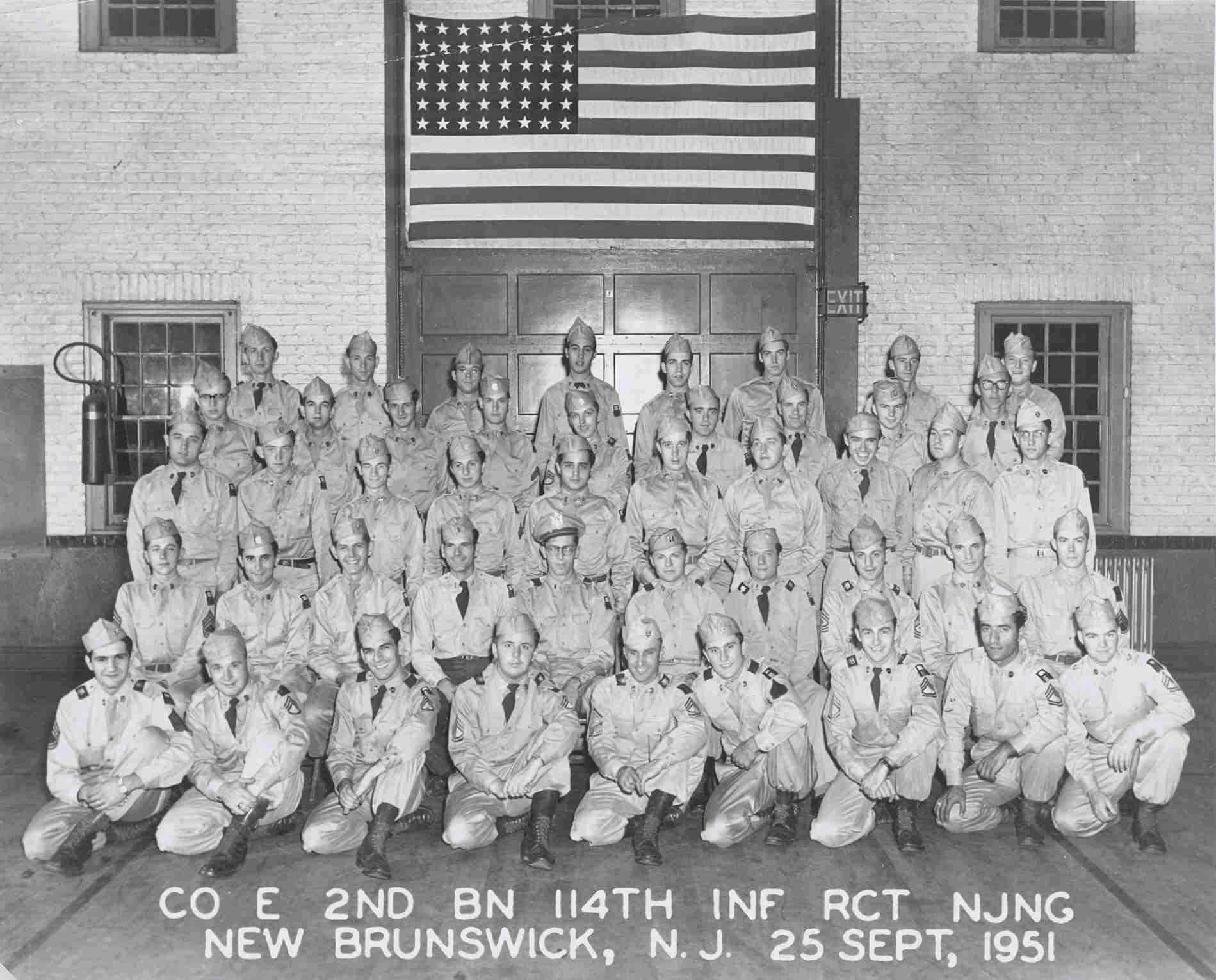
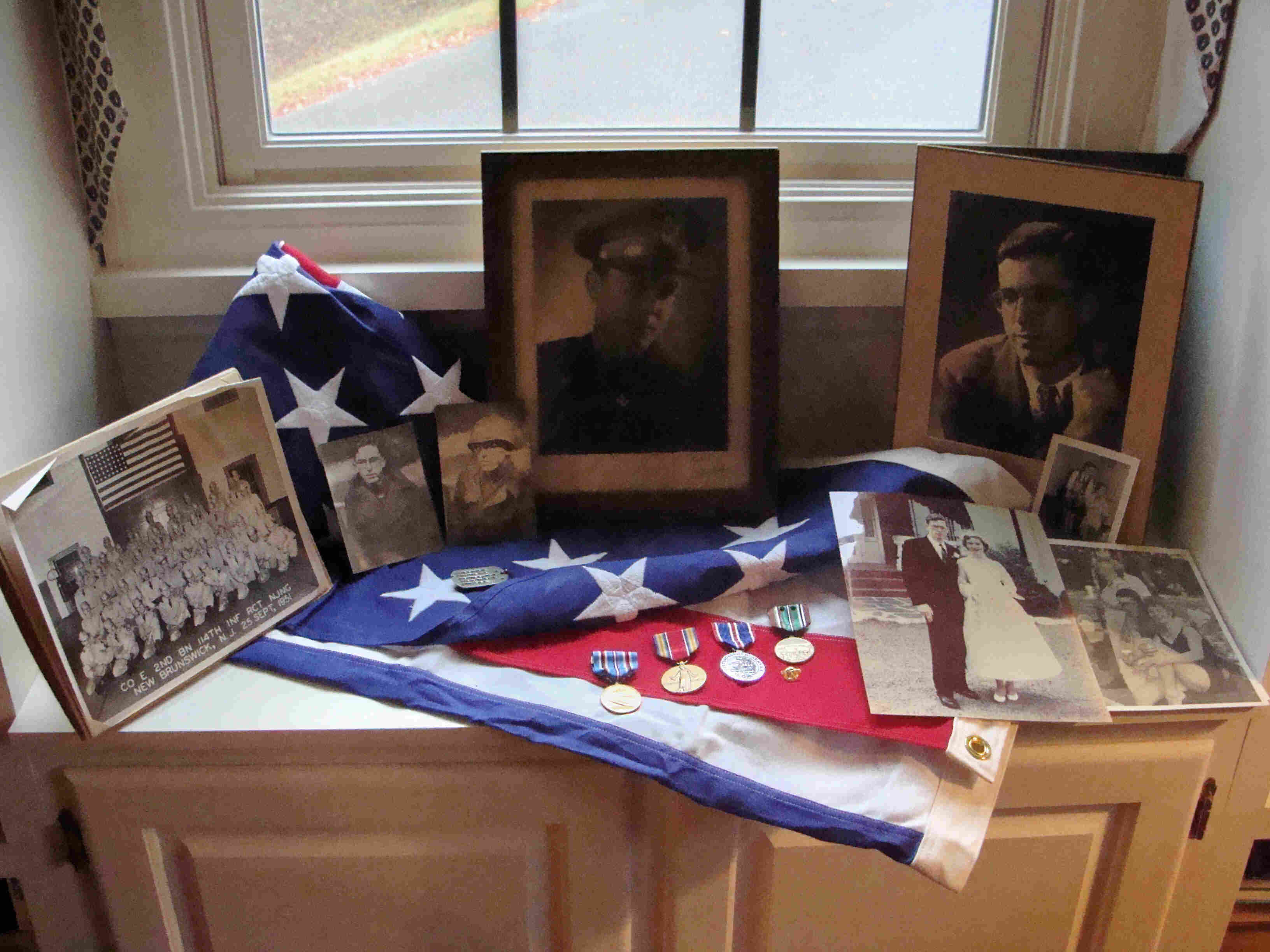
Photo source: Christopher J. Boylan (Jacks son) Jack is wearing the WO cap, 5th from the left in the second row from the bottom. In the spring of 1946, Jack Boylan was discharged and returned home to make a formal finish of his High School Diploma. This second time around he did with the aplomb of a mature young man among youngsters. Jack later served in the New Jersey National Guard in the early 1950s in E Company, 2nd Batallion, 114th Infantry Regiment. See the photos below.
written by Steven V Boylan Colonel USA (Ret.)
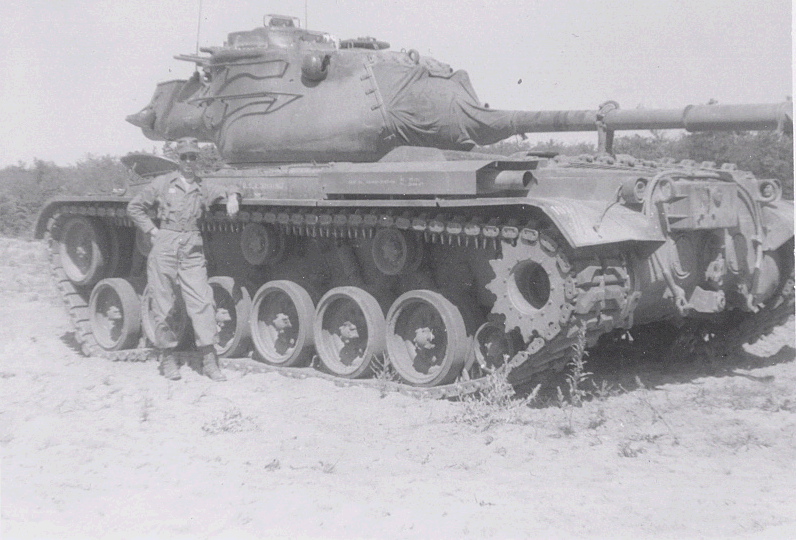
Jack in front of a tank during a New Jersey National Guard field excercise about 1954, in Camp Drum, NY (renamed Fort Drum in 1974)
Jack passed away in 2009. The whole family misses him and his wife Jan.